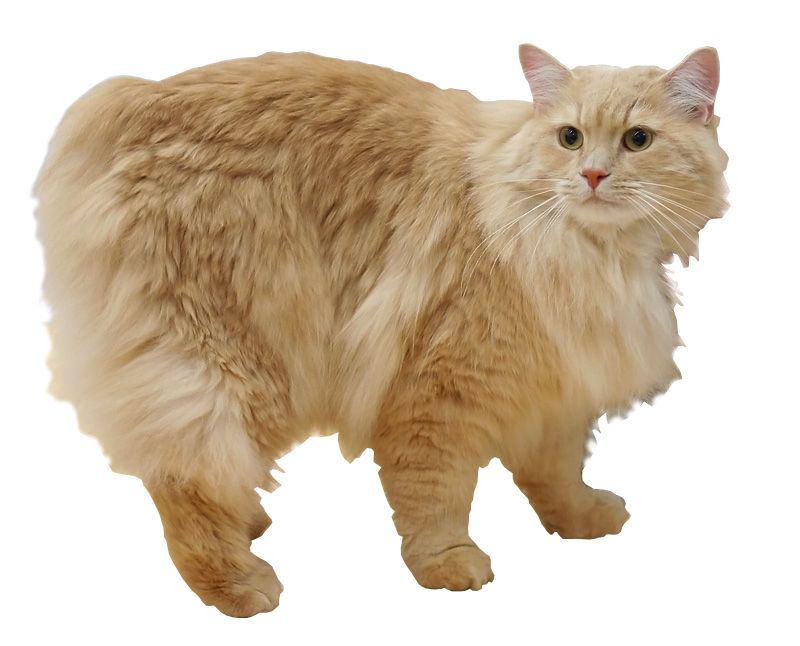
Essentially a long-haired Manx, the Cymric is a round, tailless cat with a plush double coat and a powerful, rabbit-like hind end. They are placid, affectionate, dog-like companions known for their gentle nature and their surprising jumping ability.
- Origin
- Isle of Man / Canada
- Category
- longhair
- Lifespan
- 8–14 yrs
- Size
- Medium
- Weight
- 3.5–5.5 kg
- Coat
- Medium-long, dense double coat
- Colours
- Most colours and patterns
😺 Temperament
🏡 Best suited to
📊 Personality ratings
📜 History & origin
The Cymric (pronounced KIM-rick, from the Welsh word for Wales) shares its origin with the Manx — both arose from a natural taillessness mutation among the cats of the Isle of Man. Long-haired kittens occasionally appeared in Manx litters, and breeders in Canada and the United States developed them into a recognised breed during the 1960s. Some registries classify the Cymric as a long-haired Manx variety rather than a separate breed. Its tail can range from completely absent ('rumpy') to a near-normal length ('longy').
🧼 Care & grooming
The dense double coat needs brushing two to three times a week, increasing during seasonal moults. Cymrics are powerful jumpers despite their lack of a tail and enjoy climbing. They are people-oriented and form strong bonds. Because the taillessness gene affects the spine, gentle handling of the hindquarters and a watchful eye on litter box habits are sensible.
🩺 Health notes
The breed's defining concern is 'Manx syndrome' — a spectrum of spinal and nerve defects linked to the taillessness gene, which can cause bladder, bowel, and mobility problems. Affected kittens usually show signs early. Responsible breeders avoid breeding two tailless cats together to reduce risk, and kittens are typically not homed until at least four months, when any issues would be apparent.

