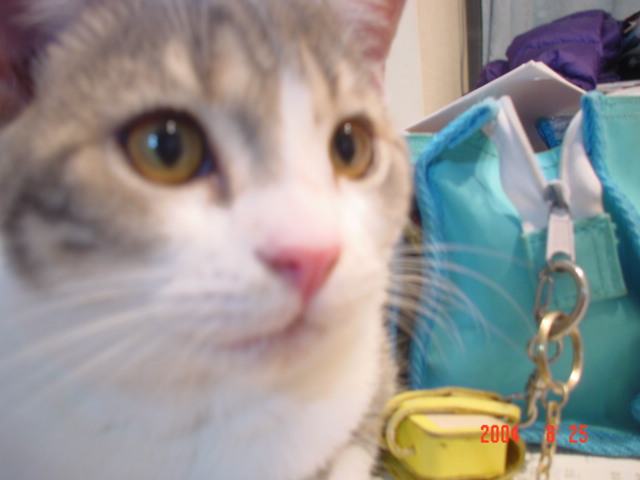
The straight-eared sibling of the Scottish Fold — a round-faced, sweet-natured cat with all the Fold's teddy-bear charm and easy temperament, but with normal upright ears and, crucially, without the cartilage disorder that folded ears carry.
- Origin
- United Kingdom
- Category
- shorthair
- Lifespan
- 12–16 yrs
- Size
- Medium
- Weight
- 3–6 kg
- Coat
- Short, dense and plush, standing slightly away from the body
- Colours
- Almost every colour and pattern, including solids, tabbies, colourpoints and silvers
😺 Temperament
🏡 Best suited to
📊 Personality ratings
📜 History & origin
The Scottish Straight is inseparable from the story of the Scottish Fold. The Fold began in 1961 with Susie, a white barn cat near Coupar Angus in Scotland whose ears folded forward. Because the fold gene causes health problems when a cat inherits two copies, responsible breeding pairs a folded-eared cat with a straight-eared one — and roughly half the resulting kittens are born with normal, upright ears. These straight-eared cats, genetically Scottish Folds in every other respect, became known as Scottish Straights, and they are far more than 'leftovers': they are essential breeding cats and lovely pets in their own right, and are now recognised as a breed by several registries.
🧼 Care & grooming
A Scottish Straight is an easy-going, low-maintenance cat. Its short, dense coat needs only a weekly brush to keep it glossy and to control shedding, rising to twice a week in the moulting seasons. This is a placid, companionable cat that enjoys being around its people and adapts happily to flats or busy family homes, but its calm nature means it can be prone to lazing about, so interactive play and a few climbing spots help keep it fit and trim. Routine care — nail trims, dental attention and the usual preventive health checks — is all straightforward with such a laid-back cat.
🩺 Health notes
The great advantage of the Scottish Straight is that, having upright ears, it does not carry the folded-ear form of the cartilage-and-bone disorder osteochondrodysplasia that affects Scottish Folds — which is precisely why Straights are used to keep the breeding of Folds healthier. Straights can still carry a single copy of the fold gene, so they are bred only to non-fold partners. Otherwise their health profile is that of a typical, robust domestic cat, with the same general watch-points as any pedigree — good breeders screen for common feline heart and kidney conditions. With sensible care these are hardy, long-lived cats.
📸 Scottish Straight photos
.jpg)
.jpg)
.jpg)
.jpg)
Photographs from Wikimedia Commons, used under their respective licences.