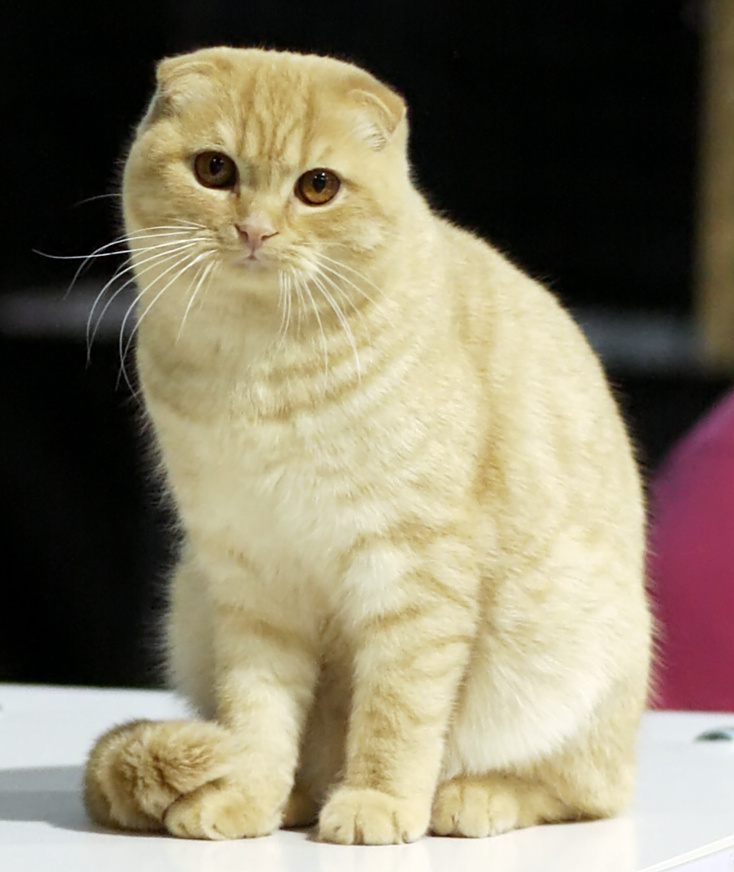
Recognizable by their folded ears caused by a natural cartilage mutation, Scottish Folds are round-faced, owl-like cats. Sweet-tempered and adapt well to indoor living.
- Origin
- Perthshire, Scotland
- Category
- shorthair
- Lifespan
- 11–15 yrs
- Size
- Medium
- Weight
- 3–6 kg
- Coat
- Dense, padded, plush
- Colours
- Many colours and patterns
😺 Temperament
🏡 Best suited to
📊 Personality ratings
📜 History & origin
The breed began with a single barn cat named Susie, found in Perthshire, Scotland in 1961. Susie had unusual forward-folded ears, and shepherd William Ross worked with geneticist Pat Turner to develop the breed. Breeding two Folds together was quickly banned after it caused severe skeletal deformities; all Folds must be bred with a straight-eared cat. Controversy around the health of the fold mutation continues.
🧼 Care & grooming
Weekly brushing for their dense coat. The fold mutation requires careful monitoring — Folds are prone to arthritis in their tail, legs, and feet. Regular vet checks of joint mobility are important. Avoid breeders who cross Fold-to-Fold. Many vets advise providing extra-cushioned bedding.
🩺 Health notes
Osteochondrodysplasia (OCD) — a skeletal disease affecting all Folds to varying degrees — is the breed's central welfare concern. All cats with the fold gene, even those with straight ears, may develop painful arthritis. Hypertrophic Cardiomyopathy and Polycystic Kidney Disease also occur. Responsible breeding practices are critical.


